Welcome to Harrisburg Bird Control: Prevention and Removal of Unwanted Birds
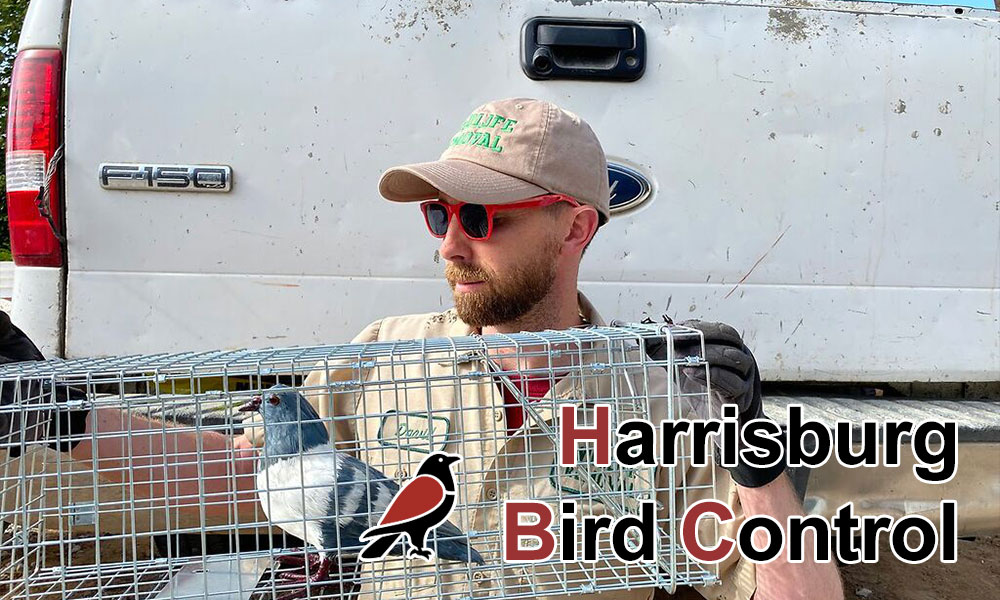
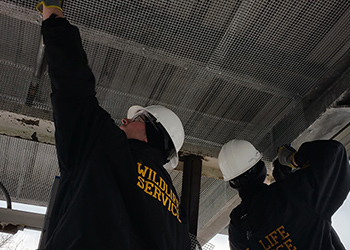
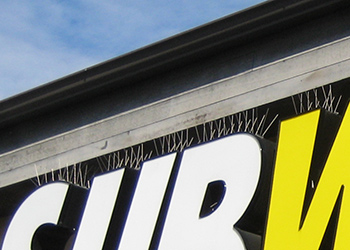
Our company specializes in resolving problems caused by birds in Harrisburg, Pennsylvania, both residential and commerical. We handle bird species such as pigeons, starlings, grackles, sparros, and even Canada Geese and woodpeckers. We generally don't kill birds - we prevent them from causing problems. Most commonly, this means that we install barriers that prevent them access to your building or property, or anti-roosting devices that prevent them from landing, nesting, or roosting on your home, store, building, or anywhere. We use netting, needle strips, shock track, and more. We do offer trapping in some cases, and removal of birds from warehouses, grocery stores, or other commerical or industrial buildings by netting or sometimes pellet shooting. We have a wide variety of tools and methods for solving every manner of bird problem. Call us at 717-312-5450 to discuss your bird problem today.Our Work
Full Range of Bird Control Services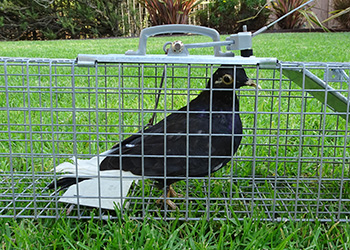
More About Us Harrisburg Bird Control:
Our founders are members of the national association of ornithologists and have worked with different professionals in the bird control industry. At our company, we take your bird problems personally. We will make your business and homes enjoyable, safe, and comfortable while delivering affordable, competent, and friendly services. By providing our clients with consistent results and quality service for more than ten years, we have gained the public's trust. Our mission is to give our customers top-notch services in the local area and nearby cities. We make them our priority, and we want them to feel our care. Our customer support is available 24/7 and will help you find the most convenient schedule. We also want you to know that 98% of our job requests will be solved in the next 48 hours. We will make ourselves available when you need us the most. Once you heard those strange noises on your roof, or you noticed the signs of bird invasion in your yard, call us immediately. They can carry more than 60 zoonotic diseases, and some of them can put your life in peril. Their fecal matters can corrode different materials that can lead to expensive repairs. Prevent that from happening by seeking our assistance today.Pigeons and Diseases: The Terrifying Risks You Should Know About
It seems a little odd to refer to the pigeon as an animal to be feared, but when you delve a little deeper into the bird, specifically, the diseases it can carry and then transmit to other animals, you can start to understand why no one seems to want them in their back gardens. Starlings, sparrows and other bird species are fine, even welcomed into back gardens with bird baths and feeders. But pigeons are an entirely different story. An entirely different DANGEROUS story. Much more dangerous than you'd probably have thought.
Why are pigeons so dangerous?
The problem with pigeons is within their poop really. The bird itself is a relatively harmless bird, and there's a slim chance that this particular bird is going to peck you to death. More likely to flap away from humans than stay and fight them, the only time this animal will come really close to you is if it thinks you might have food, at which point you'll never be able to get rid of it. Feeding these creatures is what has led them to become such a pest, not just in the United States, but also all across the globe.
Pigeon feces, however, doesn't go anywhere. At all. It sticks, like concrete, and the birds even use it as a concrete-like substance to help build their nests. As it dries, it hardens, and as more fecal matter is dropped into the nest, first by the other male and female and then from any young pigeons they breed, it becomes more sturdy and safe. With enough time, these birds could build a virtually indestructible nest.
Not only does pigeon feces dry like concrete, look pretty awful, and prove difficult to get rid of, but it also has the opportunity to spread around a whole host of different and sometimes deadly diseases. Unfortunately, the disease threat goes UP as the fecal matter dries, which means you can't deal with it in the same way that you can with certain other pest animals.
There'll be no sweeping up this poop!
Pigeon droppings need to be handled with care and caution, and preferably vacuum cleaned away. Once the droppings have dried, part of it is left dry and dusty and these particles can then become airborne because they are so small and light. What this means, however, is that the disease spores present on the fecal matter can then become airborne, too. This is the same for a lot of bird poop, and also bat poop, too. You just can't wash or sweep it away like you would with the dried droppings of bigger, non-flying pests.
When it comes to actually cleaning up the fecal matter, you will need to ensure that you are appropriately and properly protected. Disposable protective coveralls or clothing is advised, but if you can't get your hands on these just be prepared to throw any clothing that you do wear away. Wear your oldest, most throw-away clothes.
Shoes covers are just as important. You can't guarantee that you are washing off every shred of disease spores when you throw your clothes in the washing machine, and this is even more so the case when you're talking about footwear. If you can't get protective covers for your shoes, be prepared to throw the shoes that wore you clean up the pigeon mess away.
You will also need gloves and goggles to protect your eyes, and also a breathing mask. This should be worn by everyone partaking in the cleanup operation, and should be disposed of in the same manner as the rest of the material that you are cleaning up — safely and properly. Some people find a fire is the best ending, and this can destroy the disease threats as well as the physical material.
Diseases that you can expect to come into contact with when you're dealing with pigeons include:
- Salmonellosis, also known as ‘food poisoning' or a ‘tummy bug
- E.coli, similar to salmonellosis, but can be more deadly
- Candidiasis, also known as a yeast infection
- Histoplasmosis, a respiratory disease that can become airborne when fecal matter is dry, and can also be contracted from bats and other birds
- St. Louis encephalitis, spread around when an infected bird is bitten by a mosquito.
Also read our other bird tip: Will the city or county animal services help me with a pigeon issue?
We have the most experience in Harrisburg at understanding the nuisance birds of Pennsylvania. Our 7 years of experience in the field ensures excellent results.
We pride ourselves on the quality of our bird control work. Our work is professional grade and long lasting, usually for the life of the building.
We are fully Pennsylvania licensed. We carry the correct safety equipment, and operate in a safe and professional manner to keep your building and people safe.
Call us at 717-312-5450 to discuss your bird problem and our process. We are always responsive by phone. We can usually schedule next-day appointments, and provide written estimates for all our bird work.
Thank you Harrisburg Bird Control for keeping the pigeons off of my storefront. My sidewalks are clean now!
These guys were the only ones who could get a sparrow out of my clothing store. Thank you!
Your goose abatement program has kept my golf course dropping-free. I recommend Harrisburg Bird Control.